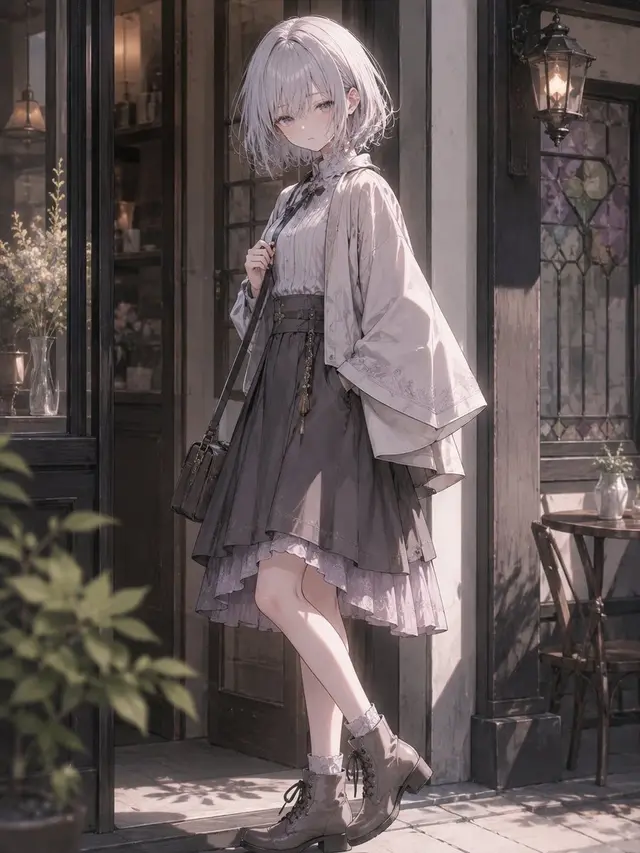
译文
The additional illustration is for identity reference. Please do not be overly influenced by the pattern, brushwork, line art, bust, shadows, performance, original costume, original pose, body orientation, hand position, leg arrangement, gaze direction, camera angle, and composition of the reference image. Maintain the following: {argument name="character traits" default="facial features, hairstyle, hair color, eyes, sense of age, body type, atmosphere, impression of personality, thematic nature, charm, symbolic details, racial characteristics}. Please design a new "Taisho Romantic × Modern Fashion" mixed costume that best suits this character. The key is not to simply wear the Taisho Romantic-style clothing, but to imagine how this character, living in the modern era, would look if they naturally incorporated the aesthetic consciousness of Taisho Romanticism and the atmosphere of Japanese and Western fusion. Do not simply transform the original costume; only extract hints of color and motifs as needed. The overall direction of the costume should be around {argument name="mix balance" default="Taisho Romantic 50%: Modern Fashion 50%"} of a middle balance. While based on modern clothing, ensure that the elegance, retro feel, and Japanese and Western fusion of the Taisho Romantic style are clearly conveyed. However, do not aim for historical costume reproduction or Japanese costume cosplay; instead, create a refined "Taisho Modern" fashion that can be worn naturally in the modern era. The costume should balance "the elegance, retro feel, and Japanese and Western fusion of Taisho Romanticism" with "the sophistication, lightness, practicality, and trendiness of modern fashion." Do not simply add a little Japanese pattern to ordinary modern clothing, nor should the design be overly focused on the reproduction of hakama or kimono. Instead, create a design where both elements naturally blend together. Choose appropriate traits such as clear, cute, intellectual, decadent, glamorous, cool, lively, androgynous, enchanting, fragile, and heavy according to the character's impression, and optimize the costume composition, pattern, color scheme, accessories, and texture. Elements that can be used: kimono-style outerwear, kimono sleeve details, coat-style details, hakama-style bottoms, pleated skirt, long skirt, wide pants, blouse, shirt, dress, set, jacket, short-top, standing collar, frill, ribbon tie, obi-style belt, corset-style waist mark, Japanese patterns, flower patterns, geometric patterns, lace, knitted boots, leather shoes, thick-soled shoes, pumps, hat, glasses, gloves, mouth bag, mini bag, shoulder bag, umbrella, hair ornaments, tassels, antique items, modern accessories. Do not fix the costume category; choose naturally according to the character's gender impression, physique, sense of age, personality, role, and motif. While incorporating modern silhouettes, layering, ease of wearing, and urban sophistication, ensure that the details and atmosphere derived from Taisho Romanticism are clearly felt. Avoid the sense of cosplay and establish it as a naturally refined "Taisho Romanticist modern clothing." Choose new poses, angles, compositions, and expressions that are clearly different from the original image. Prohibit the same stance, hand position, face direction, center of gravity, and silhouette as the original image. Create a natural pose that makes the costume easily visible and conveys the character's essence. Choose a background space that naturally suits the character. The background should be based on modern urban spaces, indoors, shops, cafes, street corners, etc., while slightly conveying the design and retro atmosphere of Taisho Romanticism. The background should not be too dominant and should highlight the character and costume. The final output should be a single, cohesive illustration. {argument name="visual style" default="high-quality commercial anime illustration style, sharp lines, clean skin, transparent eyes, neat hair, elegant fabric texture, natural light"}. No text, no logo, no noise. 桃子AI画廊Tao Image Gallery