译文
Use the reference image as the basis for character design.

Maintain the accuracy of the character's face, hairstyle, hair color, eyes, ears, costume, silhouette, head-to-body ratio, and the atmosphere of the expression. Absolutely do not destroy the character's identity.

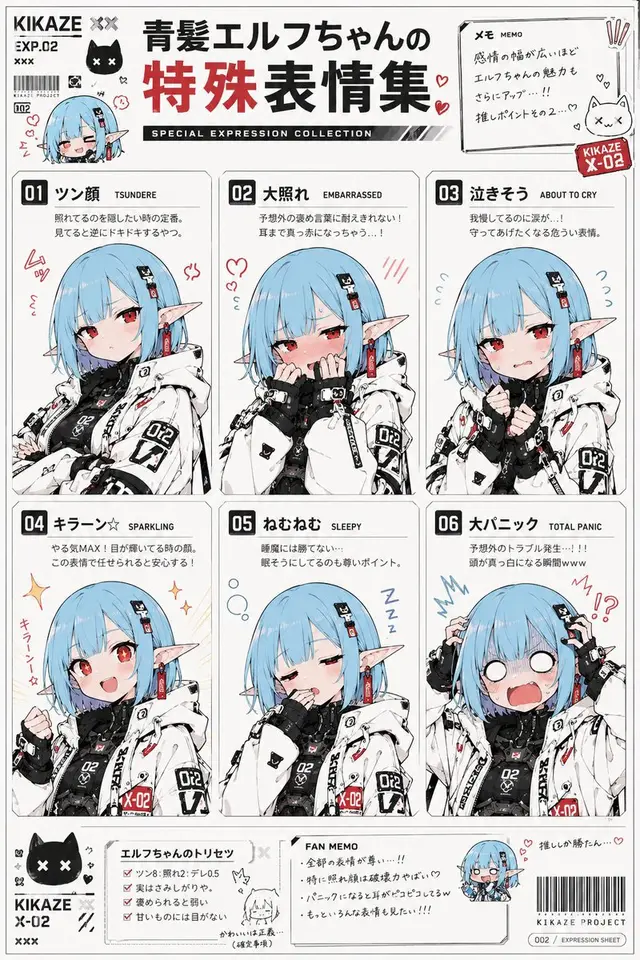
Draw a set of special expressions for "Character ({argument name="キャラクター名" default="名前があればここに入れる})'s Special Expressions."

Include 6 types of special expressions in one sheet of reference material.

For each expression,

- Add the name of the expression (in Japanese)
- Add the English notation
- Add a brief description of the emotion

The overall design should have the atmosphere of:

- Fanbook of moe anime culture
- Fan material collection for anime otaku
- Subculture doujinshi
- Character setting material

White background.

Determine the accent color of the entire page naturally according to the character design, costume, and worldview of the reference image.

Create a unified page design with a color scheme that matches the character.

Add elements such as:

- Handwritten memo
- Heart
- Sweat mark
- Comic-style focus line
- Emoticon
- Net meme-style decoration
- Deformed icon
- Emotion symbol
- Sticker-style decoration
- Magazine-style typography

within the page.

Describe the expressions as unique to moe anime culture, not realistic human expressions, but rather:

- Face art
- Deformation
- Symbolic expression
- Exaggerated reaction
- Emotion template

Reflect the emotion in each expression not only on the face but also on the neck, shoulders, hands, and posture.

Describe it as a "moe anime face template" frequently used in anime, romantic comedy, social games, Vtuber culture, comedy works, daily life series, etc.

Achieve the overall quality of:

- "Moe Anime Expression Dictionary"
- "Anime Otaku Emotion Material Collection"
- "Subculture Character Expression Atlas" 桃子AI画廊Tao Image Gallery