译文
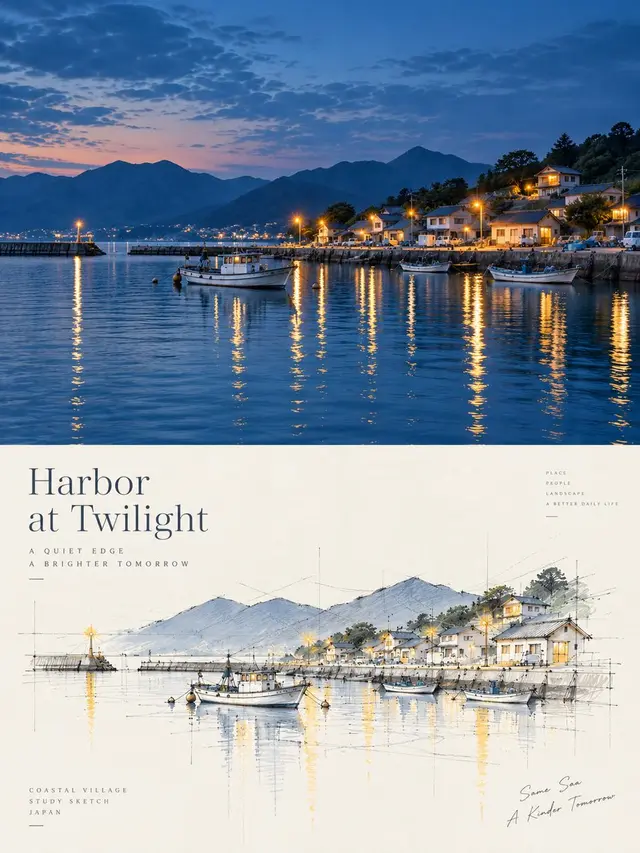
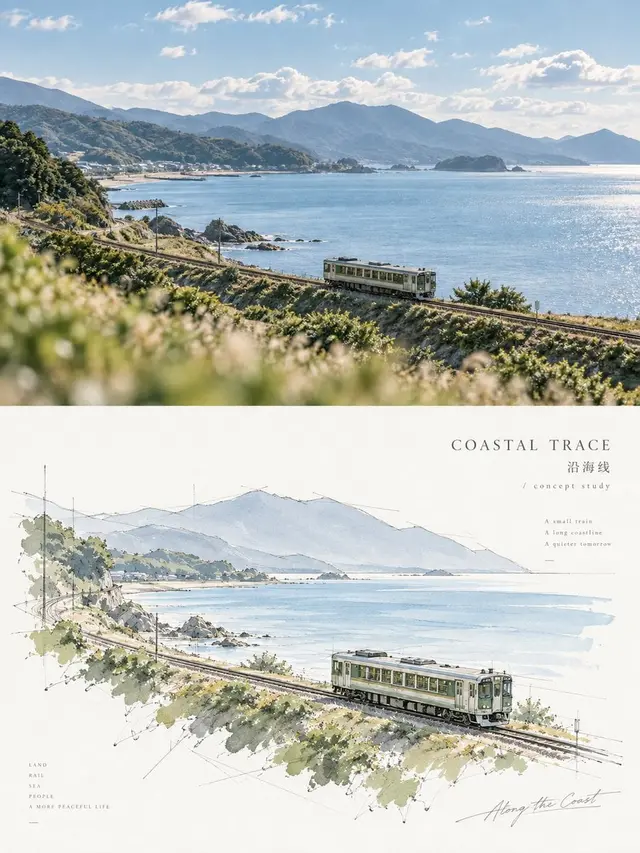
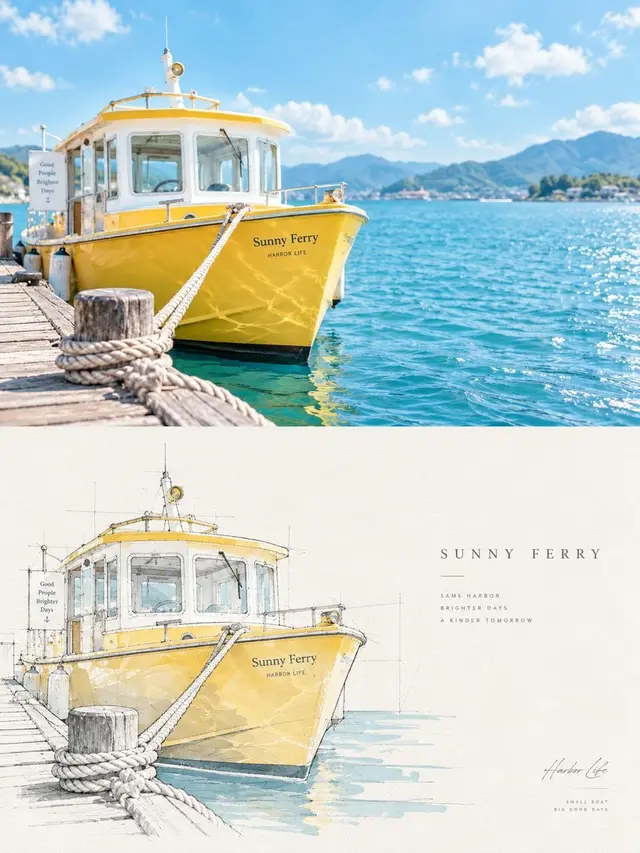
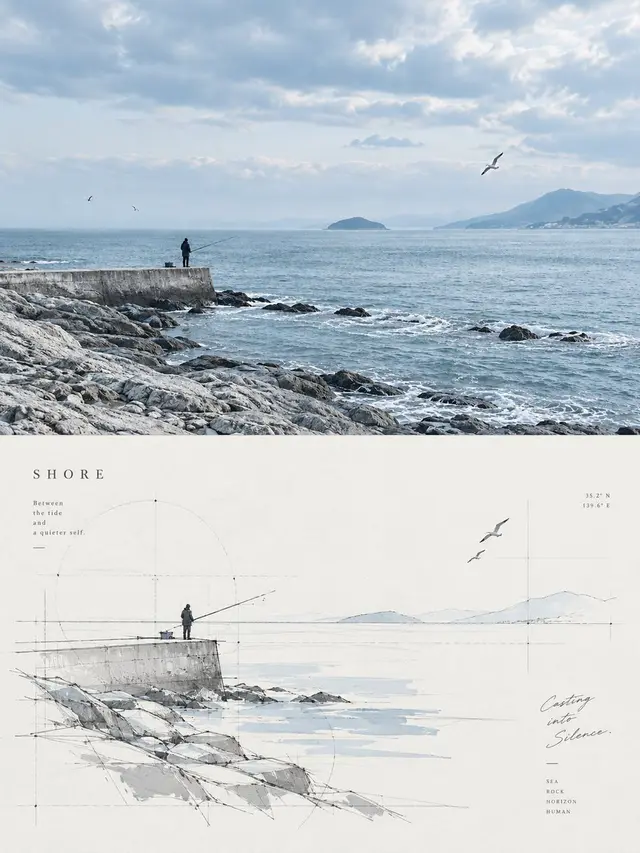
Please create an independent, high-end design poster for each photo you upload, without combining multiple images. Each photo should be output separately. The overall composition should be in a 3:4 vertical format, with the top and bottom sections each having a height that is strictly 1:1, occupying 50% of the image.

The top section should retain the original photo, maintaining the subject's identity, structure, posture, realistic texture, natural lighting, and original color atmosphere. Only a slight advanced color grading is allowed to give it the texture of an art magazine and exhibition image. To fit the frame, the environment background can be naturally expanded, but the subject must not be stretched, distorted, or altered.

The bottom section should only extract the most recognizable subject, silhouette, structure, posture, and narrative relationship from the photo, reconstructing it into an architectural concept perspective sketch or hand-drawn architectural scheme. Do not retain the entire scene or copy the photo item by item; actively remove most of the background, scenery, and irrelevant details, leaving only the core forms, spatial relationships, and visual memory points that best represent the original theme.

The bottom section should be re-judged in terms of art. Even if the original composition is poor, the background is chaotic, and the subject is small, it should be saved into a valid work through deletion, recombination, cropping, scale changes, and blanking, truly giving the model the power to re-direct the scene.

The style should be freehand perspective sketch + a small amount of selective color blocks. Lines should be relaxed, controlled, slightly repetitive with pauses, and a few auxiliary lines, extension lines, construction lines, and geometric reference lines for architectural hand-drawn can be retained to form a clear design deliberation sense. Color should only be slightly applied to a few key areas to emphasize the subject, structural layers, local shadows, or spatial focus, with the rest of the area left uncolored as much as possible.

The image must be centered around a large amount of conscious blanking. The subject should be smaller and more refined, with the rest of the space left largely blank. Blanking is not an empty background but part of the composition, which should be combined with the subject, line drawing, reference lines, shadows, and a few color blocks to form a sense of breathing, space, and rhythm. The subject can be off-center, edge-adjacent, partially cropped, or scaled down; it's better to draw less than to fill it up.

A few geometric shadow color blocks can be added to strengthen volume, depth, and spatial layers, but avoid heavy rendering, complex environments, and realistic rendering effects. The background should remain minimalist, retaining only a very small amount of necessary site hints.

The color scheme should extract 2-4 most recognizable and vital colors from the top photo, reorganized into a cleaner, controlled, and durable sketch color system. The overall image can be moderately brightened, purified, and de-grained, mainly using beige, light gray, warm gray, soft green, light wood color, light blue gray, etc., with a few brighter but not dazzling highlight colors locally retained. Avoid dirty gray, dark, overly nostalgic, and cheap high saturation feelings.

Text should only be minimally edited, without language restrictions. A few words, short sentences, or notes can be generated based on the subject, location, action, or emotion, quietly placed in the blanking area, forming a restrained relationship between text and image.

The overall presentation should be a high-end visual effect composed of architectural concept hand-drawn, freehand line drawings, geometric reference lines, a few color blocks, geometric shadows, an excessive amount of blanking, and editorial layout. Avoid retaining complete scenes, item-by-item copying, complex backgrounds, full-frame coloring, realistic rendering effects, heavy outlining, cartoonish, 3D, and template-like expressions.
 桃子AI画廊Tao Image Gallery