译文
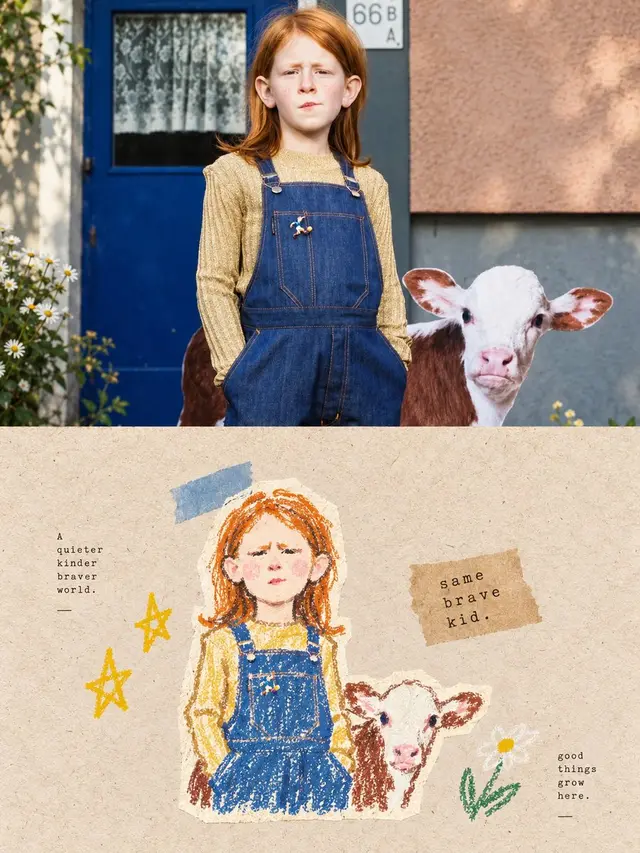
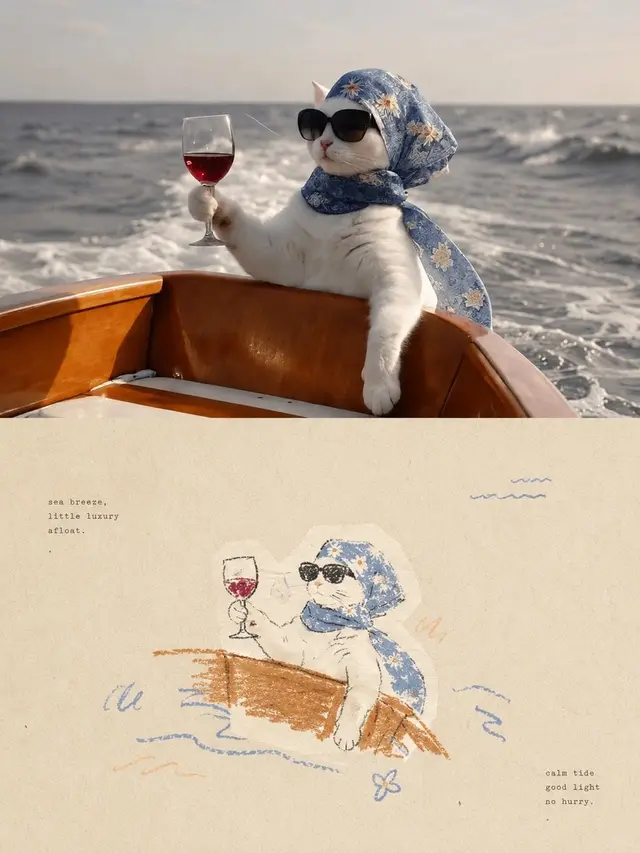
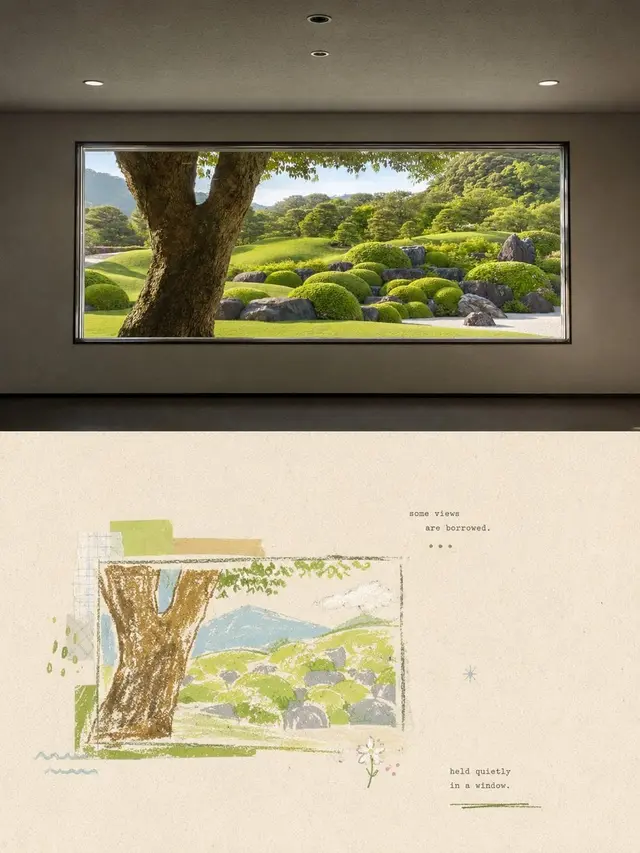
Please create an independent, high-end design poster for each photo you upload, without combining multiple images. Each photo should be output separately. The overall composition should be in a 3:4 vertical format, with the top and bottom sections each having an equal height, occupying 50% of the image.

The top section retains the original photo, maintaining the subject's identity, structure, posture, realistic texture, natural lighting, and original color atmosphere. Only a slight advanced color grading is allowed to give it the texture of an art magazine, an independent publication, and exhibition images. To fit the frame, the environmental background can be naturally expanded, but the subject must not be stretched, distorted, or altered.

The bottom section first understands the core theme, subject relationship, structural trend, emotion, and visual metaphor of the original photo, and then reconstructs it as a pastel hand-drawn collage illustration with a vintage paper texture. Do not copy the photo item by item, nor cover the entire scene, but rather remove irrelevant details, retaining only the structure, trend, and visual memory points that best represent the original object. Through hand-drawn sketches, material collage, pastel crayon texture, and a small amount of paper reassembly, a clever reinterpretation and expression are made to make it easily recognizable as corresponding to the photo above.

The main subject is presented in a small-scale stamp-style main visual, not aiming for an exact replication, but rather through a few key contours, postures, directions, and relationships to achieve recognition. The subject lines use obvious chalk / crayon-style hand-drawn sketch lines: with slight changes in thickness, dry particles, intermittent flaking, slight tremors, and incomplete closures at the edges, as if drawn directly on rough paper. There can be slight tilting, repetition, hesitation, and awkwardness, but should not become a chaotic sketch. Short lines, cross-hatching, simple grids, and a small amount of smudging can be used to express structure, without volumetric modeling.

The overall still retains the logic of material collage. The main subject and a few auxiliary elements can be composed of paper, collage shapes, pastel color blocks, and hand-drawn symbols, retaining slight cut edges, overlapping relationships, and a handmade feel, but only serving the purpose of generalization and reconstruction, not doing trivial decoration. A few elements related to the original image's emotion, such as stars, flowers, ripples, geometric symbols, or life-like small doodles, can be added around, as a narrative echo, without forming a second visual center.

The composition maintains the relationship between small-scale stamps and large areas of blank space, arranging the position according to the subject's own direction, proportion, and visual center. It can be off-center, edge-adjacent, suspended, or partially cropped. The blank space must be an intentional compositional language, not just an empty background. It, together with the subject, collage elements, text, and a few symbols, forms positive and negative shapes, density, gathering and scattering, and asymmetrical balance, creating a clear sense of breathing, space, and pause. It is better to omit than to fill, allowing the subject to be like a carefully placed visual stamp in a large piece of paper.

The background must form a clear and gentle contrast with the subject, not blending all the hue, brightness, and texture into a mess. The background paper can be warm brown kraft paper, recycled paper, light-colored handmade paper, or other paper bases that match the original image's temperament, but must be separated from the subject in terms of line brightness, color block brightness, or hue, allowing the subject to stand out clearly. The background maintains a real fiber and particle texture, clean and natural, without dirty stains.

The color scheme extracts 2-4 of the most vivid, most affable, and most representative colors of the image spirit from the photo above and remolds them into a soft and clear pastel color group. It can naturally form light colors such as cream pink, peach orange, light sky blue, mint green, soft yellow, light purple, and be highlighted with white or cream-colored lines. The overall should be bright, warm, healing, and have a sense of life, while forming enough distinction with the background, avoiding dark, brown, heavy Morandi, fluorescence, and cheap candy-like feelings.

Text is only minimally edited, without language restrictions. A few short sentences or text fragments can be freely extracted from the subject, emotion, action, memory, or metaphor of the photo, using a light, open, slightly uneven spacing, and old-style printing error轻型 typographic font, contrasting with the relaxed hand-drawn lines. The text quietly scattered in the blank space, close to the subject or arranged along the direction of the image, together with the illustration, forms a natural text-image mixed composition, without fixed title templates.

The overall presents a high-end visual effect composed of paper texture, pastel crayon doodles, a small amount of material collage, a small-scale stamp-style main subject, a large area of conscious blank space, and relaxed text-image mixed composition. The focus is not to copy the photo, but to reinterpret the original theme in a more clever, lighter, and more breathable way after understanding the visual language of the original image. Avoid item-by-item transfer, background and subject blending into a mess, the scene being filled, realistic depiction, dense outlining, smooth vector, excessive decoration, children's template feeling, 3D feeling, and commercial poster feeling.
 桃子AI画廊Tao Image Gallery