译文
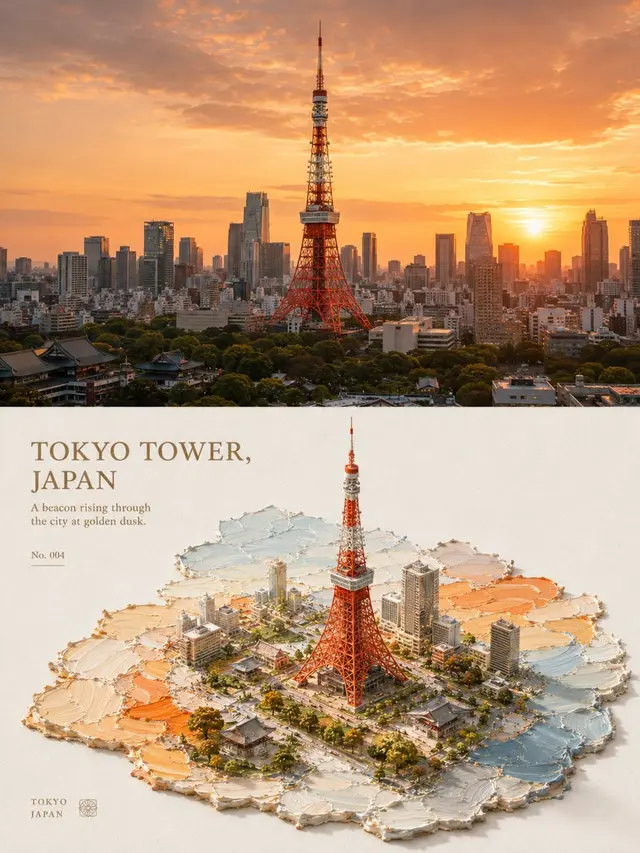
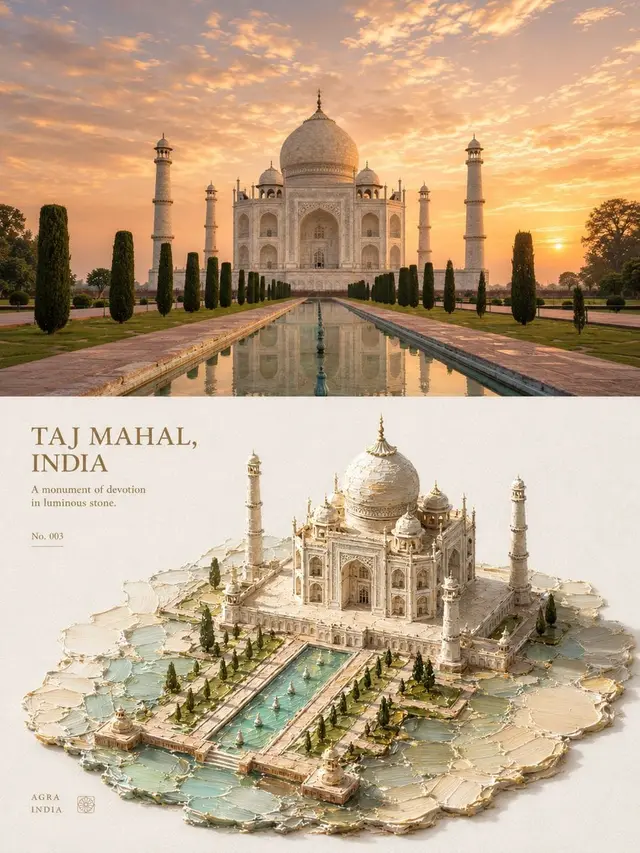
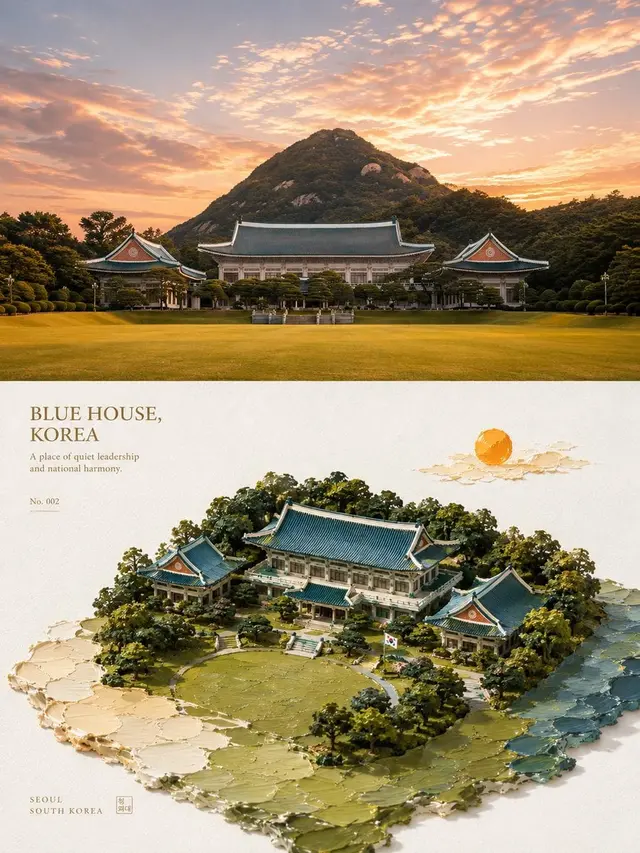
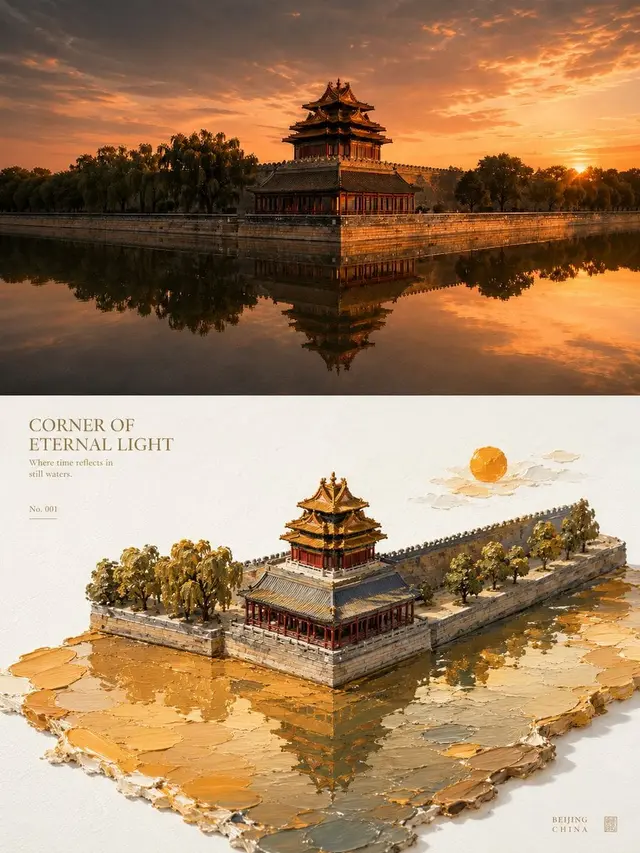
Please create an independent, high-end design poster for each photo you upload, without combining multiple images. Each photo should be output separately. The overall composition should be in a 3:4 vertical format, with the top and bottom sections each having an equal height, occupying 50% of the image.

The top section retains the original photo, maintaining the subject structure, real texture, natural lighting, and original color atmosphere. Only a slight advanced photography color grading is applied to give it the texture of an art magazine, an independent publication, and exhibition photography. To fit the frame, the sky, ground, or environmental background can be naturally expanded, but the subject must not be stretched, distorted, or altered.

The bottom section extracts the most recognizable subject, silhouette, posture, and narrative relationship from the photo and reconstructs it into a delicate thick-painted micro-landscape using isometric/axometric 3D spatial logic. The subject is not a flat illustration but a three-dimensional mini-figurine with clear volume, structure, front-to-back relationship, and stable landing point. The most critical identity features of the original object are retained, and the perspective and proportions can be moderately adjusted to make it more complete, clear, and sculptural in the unified axometric space.

The subject sits on a thematic color field formed by thick-painted pigments. The color blocks are not ordinary rectangles but should be transformed into water, ground, road, grass, light strips, shoreline, shadows, or other space slices related to the theme based on the original content, and naturally extended along the isometric perspective direction. The subject must have a real spatial relationship with the color block, which can appear as landing, embedding, crossing, extending, reflecting, rippling, casting shadows, or partially overlapping, cleverly connecting the two-dimensional thick-painted brushstrokes with the three-dimensional subject.

The composition adapts to the volume, orientation, and movement direction of the subject, establishing a professional spatial order with diagonal axometric, stable center of gravity, front-to-back depth, and large areas of blank space. The subject is usually located at a key node of the color block rather than mechanically centered, with the color block guiding the line of sight and extending perspective; a group of low-weight clouds, sun, plants, ripples, or abstract natural imagery can be added when necessary, forming a front-to-back layer with the subject without establishing a second visual center.

The painting language uses a fusion of three-dimensional mini-model × thick-painted oil painting × real paper surface. The subject details are exquisite, the volume is clear, and the surrounding environment retains obvious scraper marks, thick pigment堆积, undulating edges, and hand-painted strokes; clouds, water, ground, and light can have a relief-like oil paint thickness, creating a tactile illusion of "a real model standing on un-dried oil paint."

The color scheme extracts the brightest, most vibrant, and most representative colors of the subject from the top photo and rematches them, increasing brightness, purity, and vitality. A large amount of clean warm white is used as breathing space, paired with clear main colors and a few sun-like warm colors for emphasis. The overall look is bright, healing, fresh, and high-end, avoiding gray dirt, depression, Morandi style, fluorescence, and cheap candy colors.

The text is minimally intrusive, extracting a short title from the subject, location, emotion, or symbolic meaning of the photo, and pairing it with a minimal amount of subtext, numbering, or micro-commentaries. The layout is detailed and restrained, and can be aligned along the axometric direction, thick-painted color block edges, or blank areas, forming a clever echo with the spatial perspective, rather than being independently pasted on the image as a title.

The overall presentation is an isometric three-dimensional subject × thick-painted color field × bright healing color scheme × real paper × large areas of blank space visual relationship. Regardless of whether the subject is architecture, person, animal, plant, object, means of transportation, or natural landscape, the three-dimensional subject should truly "stand, grow, or exist" in the space composed of thick-painted color blocks, avoiding flat mapping, ordinary illustration, plastic CG, toy model feeling, and template micro-landscapes.
 桃子AI画廊Tao Image Gallery