译文
Please create an independent, high-end design poster for each photo you upload, without combining multiple images. Each photo should be output separately. The overall composition should be in a 3:4 vertical format, with the top and bottom sections each having the same height, occupying 50% of the frame.

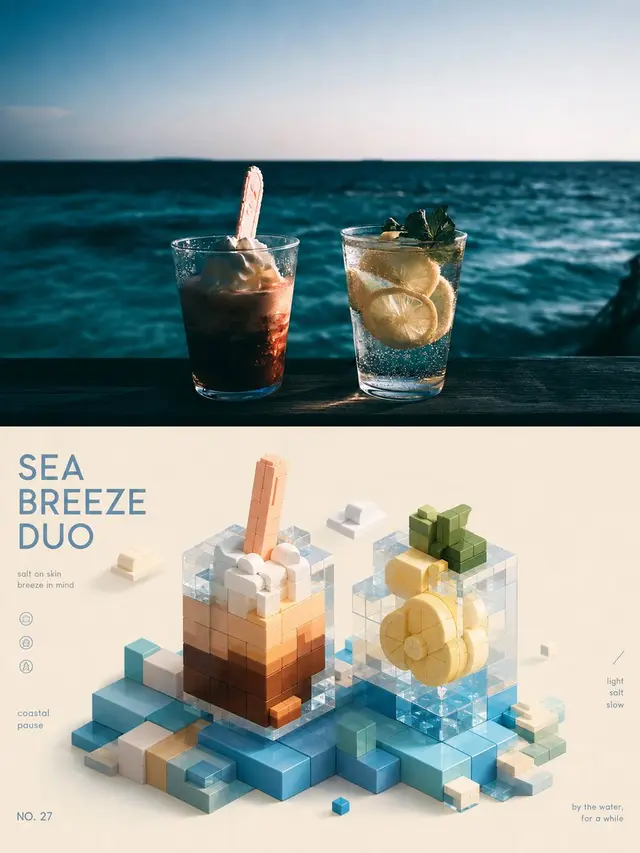
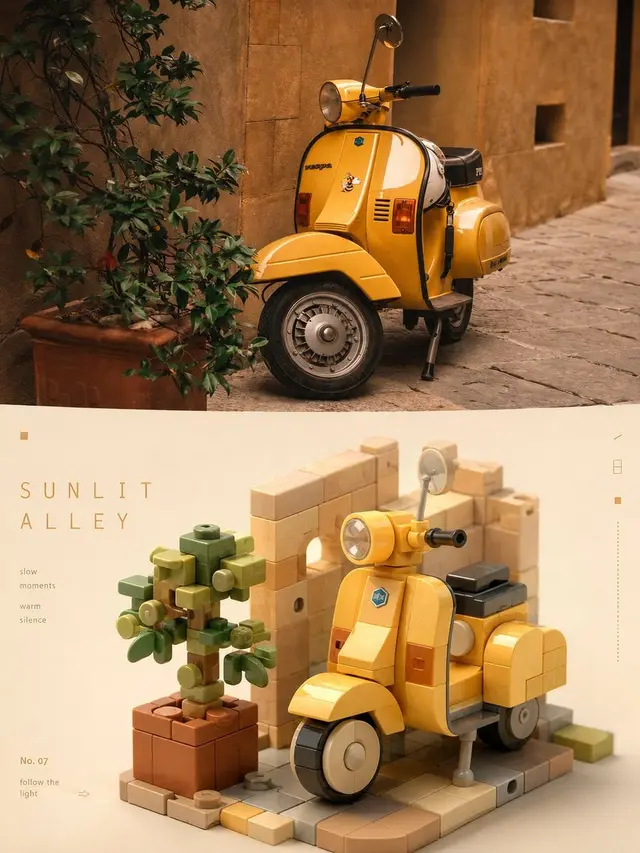
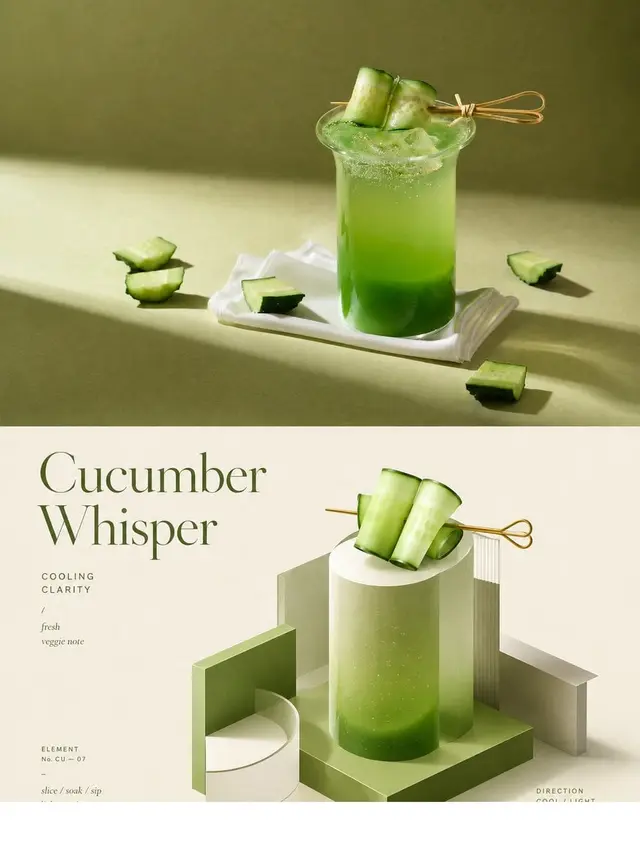
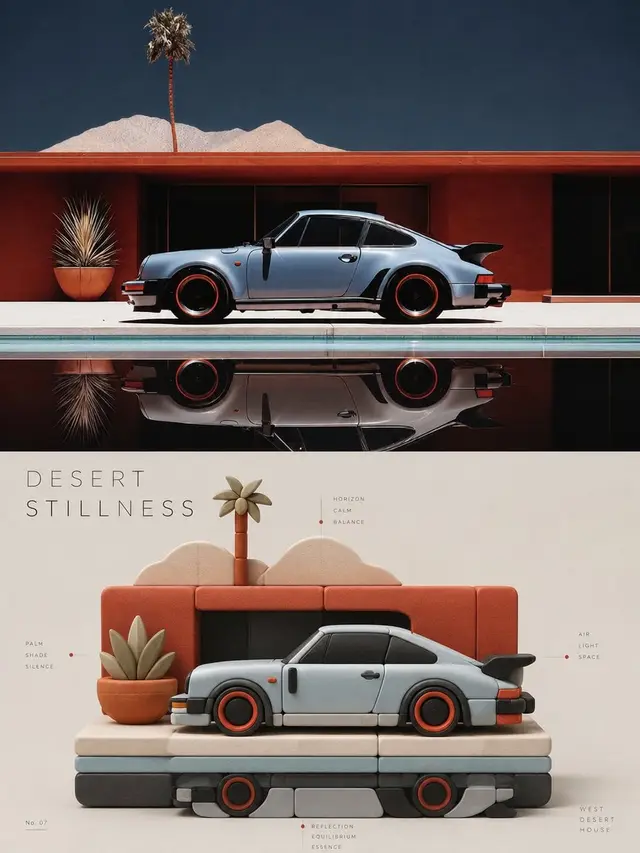
The top section retains the original photo, maintaining the subject structure, spatial relationships, real materials, natural lighting, and original color atmosphere. Only a slight advanced photography color grading is applied to give it the texture of an art magazine, independent publication, and exhibition photography. To fit the frame, the environmental background can be naturally expanded, but the subject must not be stretched, distorted, or altered.

The bottom section extracts the most recognizable subject, silhouette, posture, and narrative relationship from the photo, transforming it into a healing-themed block sculpture with a 3D / isometric spatial sense according to the logic of "deconstruction - selection - refinement - reconstruction." The focus is on retaining the most unique volume ratio, axis, curves, interlocking, overlapping, occlusion, and negative space of the subject, reorganizing them with rounded, simple, tactile modular blocks; incomplete details are replicated, but the correspondence with the original image above must be immediately felt.

The composition adapts to the subject's own visual center of gravity, posture direction, and spatial relationships. It establishes a rhythm through the use of large and small blocks, high and low layers, front and back interlocking, local floating, and changes in density and large areas of blank space. The blocks can be joined, stacked, nested, crossed, or naturally misaligned, allowing the subject to maintain its identity while also having the sculptural sense and light imagination of a contemporary art toy, avoiding mechanical disassembly and simple pixelation.

The color scheme must be derived from the original image above. First, identify the most vital and identifiable main color relationships in the photo, as well as the comprehensive color temperature, brightness levels, warm and cool echoes, and key point colors, and then re-tune these colors into a softer, clearer, brighter, and air-like healing color system. The color identity and emotional memory of the original image are retained, but the brightness is moderately increased, the eye-catching contrast is reduced, and the gray dirty colors are purified to make the colors appear gentle, playful, light, and sophisticated. Different photos should naturally receive different color schemes, without using any fixed color card, and do not forcibly add colors that do not exist in the original image.

The color rhythm is established through the main color area, auxiliary color level, source depth and lightness, and a minimal amount of vivid point colors, making the subject look rich but not cluttered, cute but not cloying, soft but with vitality. The block material uses a delicate matte, soft diffused texture, with a slight touch of pulp, wood, wax, or flexible material, rounded edges, gentle shadows, and avoids plastic highlights, metallic textures, heavy CG, and cheap toy textures.

The text establishes a light, advanced editing micro-typesetting system, extracting a 2-5 word title from the photo's light and shadow, movement, space, emotion, or symbolic meaning, and pairing it with a few status words, locations, numbers, directional words, or mini annotations, without using years. The text can be arranged along the edge of the blocks, module gaps, visual axes, or negative spaces, or it can interlock, occlude, and align with the blocks, making the text naturally become a part of the block composition.

The overall presentation should embody the visual quality of "Real Photography × Healing Blocks × Isometric Space × Original Image Color Translation × Advanced Editing Design," which is gentle, light, playful, quiet, delicate, imaginative but not childish. Regardless of the subject being a person, animal, plant, building, object, food, means of transportation, or natural landscape, unique block combinations and color schemes should develop from the original structure and colors of the image, avoiding fixed color cards, Lego-style copying, children's cartoon, e-commerce toy display, and template feelings.
 桃子AI画廊Tao Image Gallery