译文
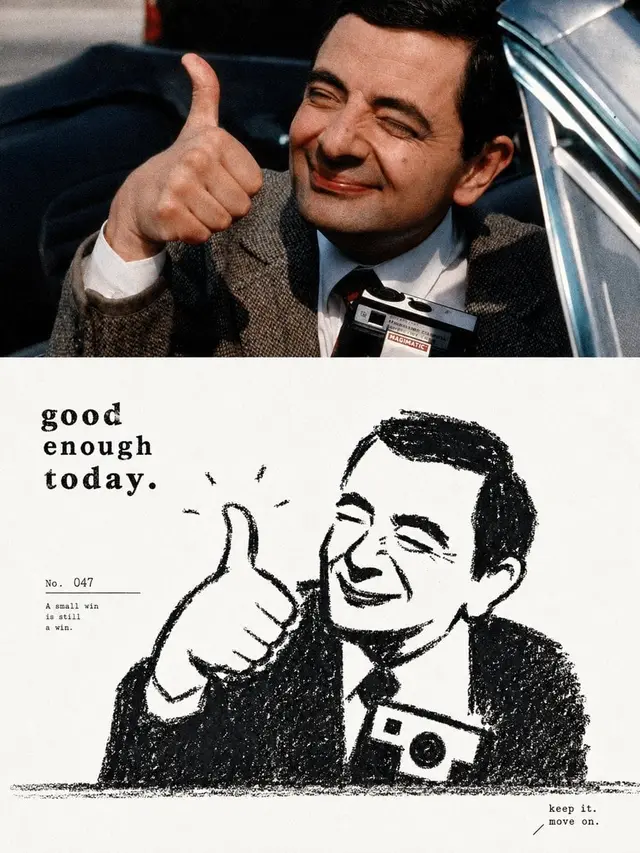
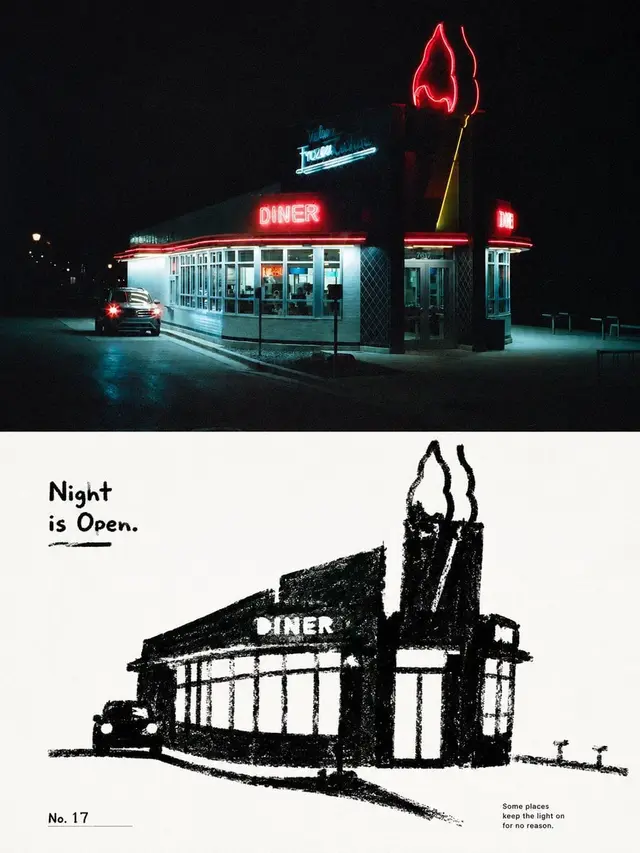
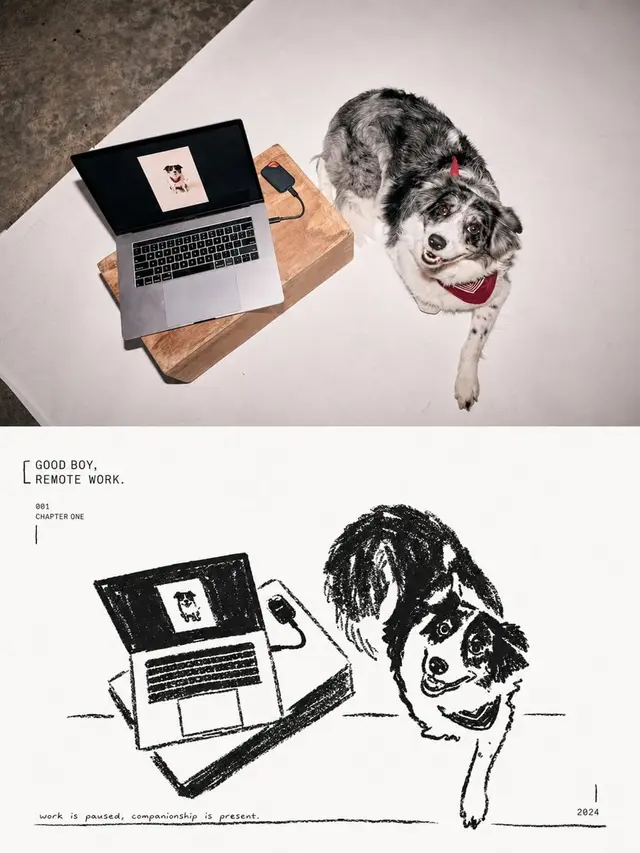
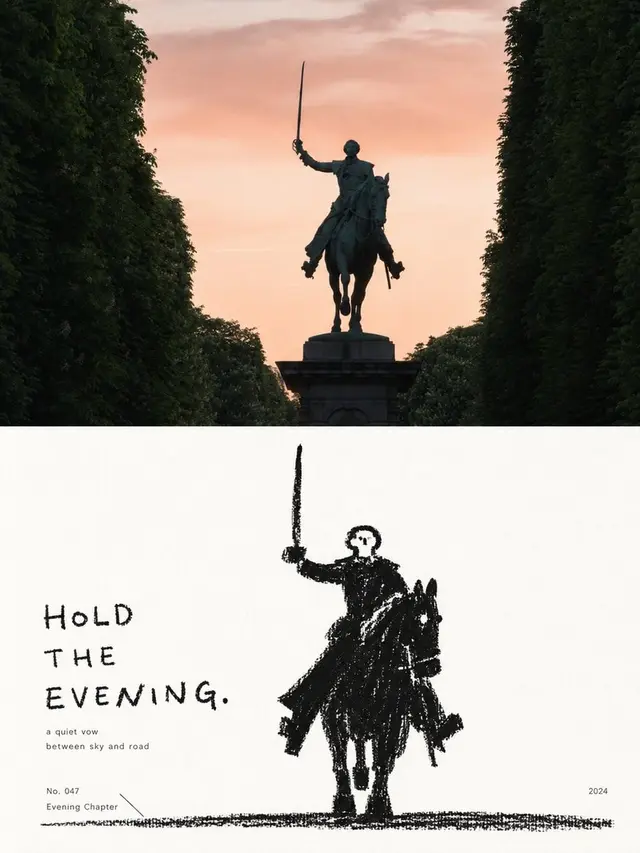
Please create an independent, high-end design poster for each photo you upload, without combining multiple images. Each photo should be output separately. The overall composition should be in a 3:4 vertical format, with the top and bottom sections each having an equal height, occupying 50% of the frame.

The top section retains the original photo, maintaining the subject's identity, structure, posture, real texture, natural lighting, and original color atmosphere. Only a slight advanced photography color grading is allowed to give it the texture of an art magazine, an independent publication, and exhibition photography. To fit the frame, the sky, ground, or environmental background can be naturally expanded, but the subject must not be stretched, distorted, or altered.

The bottom section extracts the most recognizable subject, silhouette, posture, and narrative relationship from the photo and reconstructs it into a minimalist, bold black, dry media silhouette illustration. Do not mechanically replicate the photo's details but compress the subject into rounded, sturdy, slightly naive forms. The head, main contours, or most memorable parts can be moderately enlarged to make them easily recognizable with minimal information. If the photo contains multiple subjects, retain the most important interactive relationships and view them as a single visual unit, not分散 focus evenly.

The bottom section uses only a near-pure white paper background + thick black crayon, charcoal, or dry擦痕迹, without using color or grayscale gradients. The black figures are not smooth solid vector blocks but are formed by short, forceful crayon strokes, retaining paper grain, broken lines, indentations, rough edges, uneven density, and local white spots. The contours are slightly wavy, incomplete, and inaccurate, maintaining a true handmade feel.

The most critical identifying features of the subject can be emphasized through "white feature areas cut out suddenly from the black silhouette," such as the face, eyes, window holes, vessel openings, animal faces, object core structures, or the most distinctive parts; and then complete the expression and details with a few black dots, short lines, or symbols. Do not aim for realistic facial features and precise structures but let the black and white form a direct, interesting, and strong recognition relationship.

The composition maintains a large area of pure white blank space + one main visual relationship. The subject can be centered, slightly off-center, partially cropped, or close to the bottom of the frame, using only a rough ground friction line, a few short lines, or very few environmental symbols to suggest space. Leaves, rain, smoke, tables, shadows, roads, wind, or other environmental information should be compressed into minimal crayon marks, keeping the background quiet and spacious. The overall composition does not aim for a complex scene but lets a posture, action, distance, or relationship carry the main narrative.

The text retains a small system of words with a blend of advanced editing and children's book feel. Do not just write the name of the location or object but extract a short English title from the mood, action, relationship, time, or small story in the photo, and pair it with a number, a matching golden sentence, chapter number, or a very short implicit small text. The text can be a restrained printed small font, with a small amount of clumsy handwriting, crayon letters, or irregularly shaped letters, making it seem like it belongs to this illustration.

The text needs to have a clever relationship with the graphics: it can be aligned along the ground line, extended along the subject's action direction, hidden in large blank spaces, slightly obstructing the contours, fitting in the negative space between two subjects, or connecting the number with the subject with a thin line. Maintain "one short title + 1-2 groups of very small auxiliary texts" so that the text becomes part of the composition rhythm, not just a common poster title.

The overall presentation should have the visual characteristics of thick black, clean white, simple shapes, and rough texture, maintaining a delicate balance between childlike, soft, quiet, humorous, and lonely, like an old black and white children's book re-edited by a high-end design studio. Avoid smooth digital outlines, precise line drawings, realistic lighting, thick strokes, 3D effects, color, large areas of gray rendering, cartoon stickers, and template commercial illustrations.
 桃子AI画廊Tao Image Gallery