译文
[Theme]: [Theme]
[Chinese Title]: [Chinese Title]
[English Title]: [English Title]
[Main Object / Core Element]: [Main Object]
[Nucleation Method]: [Nucleation Method]
[Main Color Scheme]: [Main Color Scheme]
[Accompanying Colors]: [Accompanying Colors]
[Date / Institution]: [Date Institution]
[Ratio]: 9:16

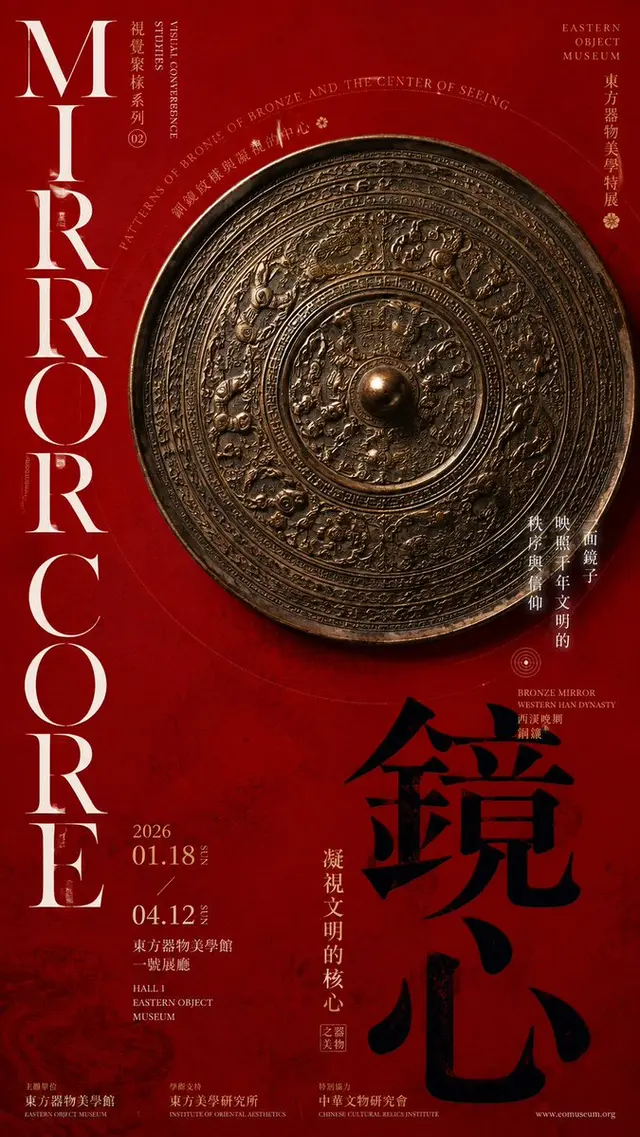
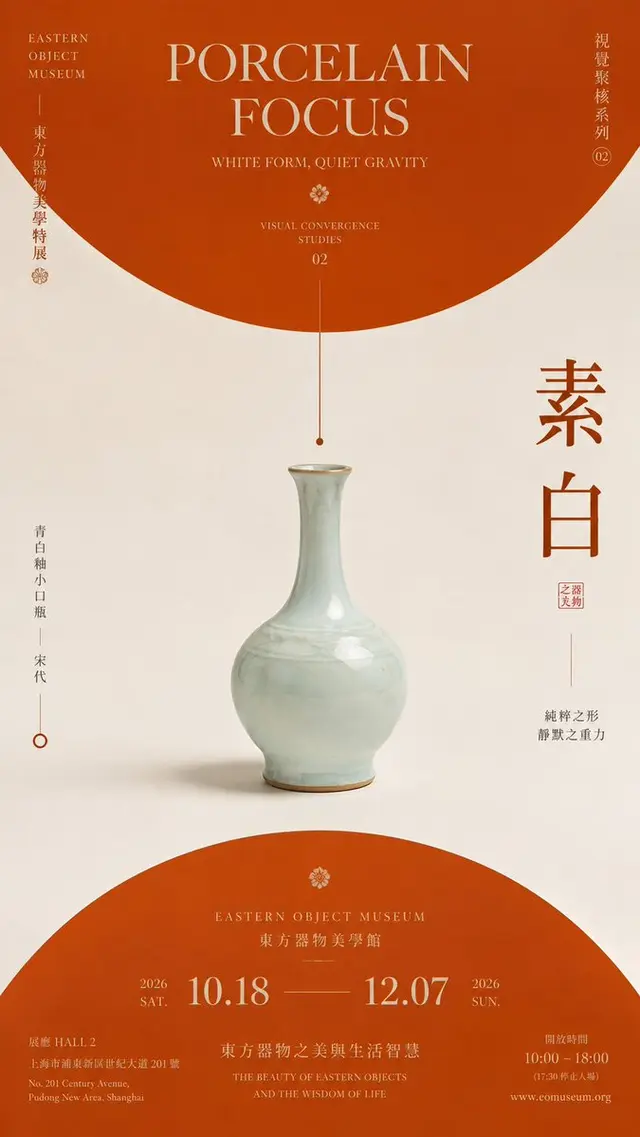
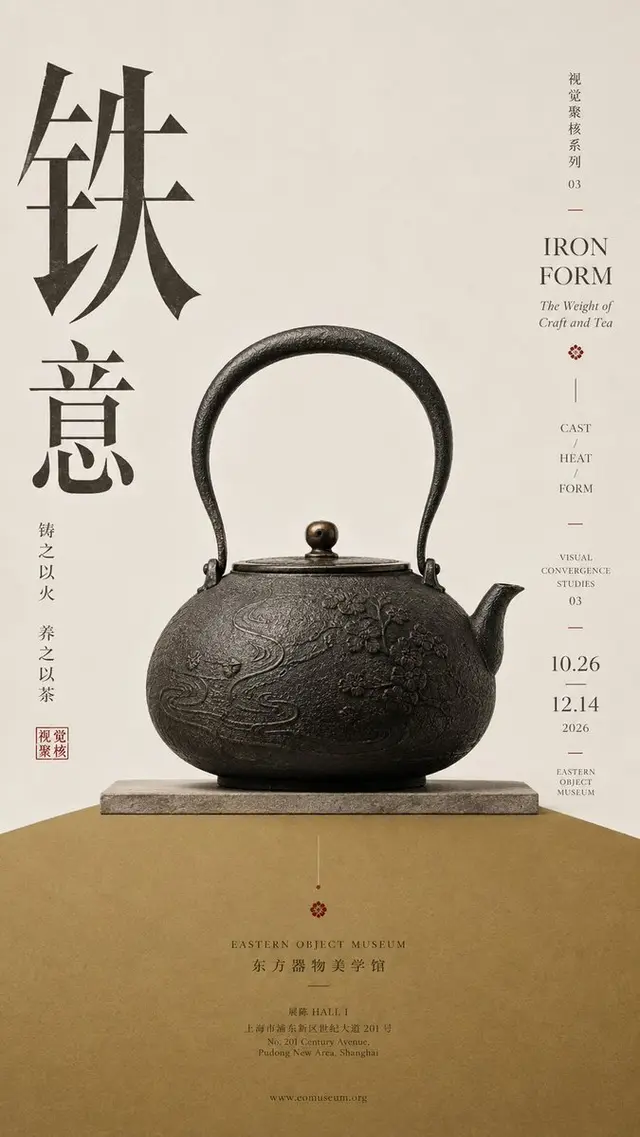
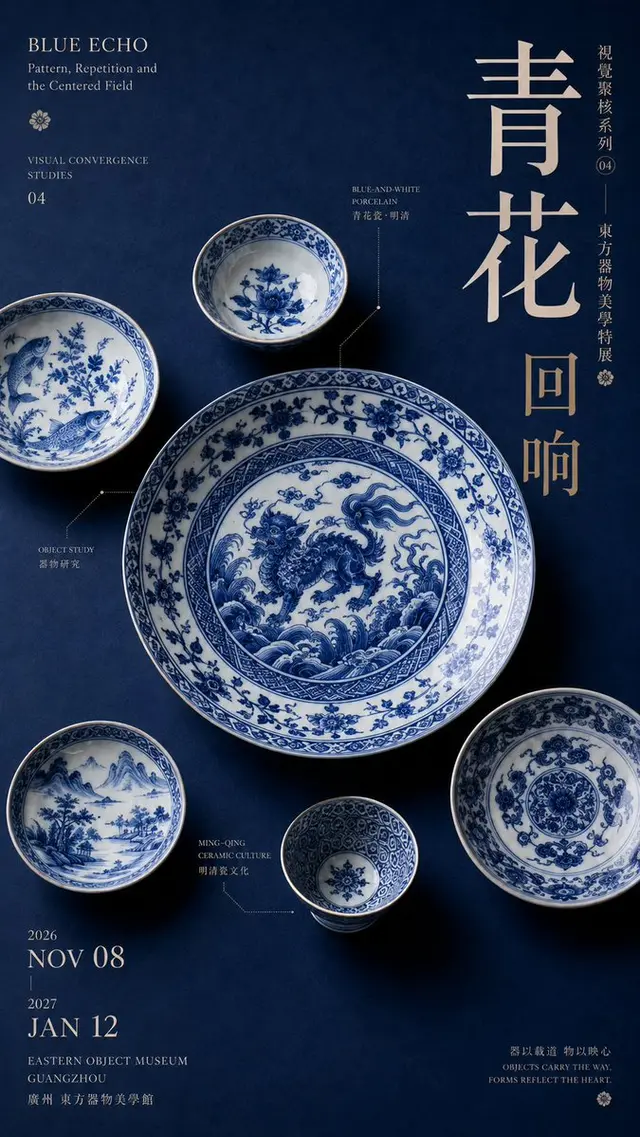
Generate a "Visual Nucleation" poster with an advanced Museum Editorial / Exhibition Poster quality.

Firstly, determine an absolute visual core, and then organize objects, text, color blocks, and white space around it. The focus is not simply placing the main subject in the center of the frame, but rather directing all visual forces towards the same core.

Choose a nucleation structure based on the theme:

- Concentric Embrace: Utilize circular subjects, text, arcs, or information to form a centripetal relationship around the core.
- Top and Bottom Constriction: Use upper and lower large color surfaces, titles, or white space to apply pressure to the middle, locking the focus on the subject.
- Bilateral Compression: Left and right Typography, color blocks, or information areas converge towards the center together; the subject itself can also use a frame-like contour to form a secondary focus.
- Array Surrounding the Core: Set a distinctly largest main object, surrounded by multiple smaller elements forming an asymmetric embrace; it is necessary to maintain clear size, density, and main and secondary relationships.

The subject bears the main visual weight, and other elements can only "surround, point towards, support, or balance" the core without establishing a second visual center.

Typography participates in composition: large Chinese titles are responsible for visual weight, while small English, date, and institution information are concentrated in 1-2 areas. Avoid spreading information evenly across the layout.

Color control is limited to 2-4 main colors, establishing hierarchy through large color blocks, object materials, and white space; retain sufficient negative space and do not stack decorations for richness.

Objects or the subject use realistic, refined museum collection photography / high-quality object photography texture, material, texture, light and shadow, and shadows are naturally credible.

Final Reading Order:
First, see the visual core → Second, feel the surrounding elements converging towards the core → Third, read the title and auxiliary information.

Overall Requirements: Clear focus, clear main and secondary, strong editing sense, controlled but with tension, and visual quality of a mature art institution, museum exhibition, or high-end cultural poster.

Avoid: The subject is simply centered, elements are evenly distributed, multiple visual centers, sticker-like scattered, excessive information, decoration overshadowing the subject, e-commerce detail page feel, travel cultural and creative product feel.
 桃子AI画廊Tao Image Gallery