译文
[Theme]: [Theme]
[Subject Type]: [Subject Type]
[Subject Content]: [Subject Content]
[Chinese Title]: [Chinese Title]
[English Title]: [English Title]
[Diagonal Composition Style]: [Diagonal Composition Style]
[Main Axis Direction]: [Main Axis Direction]
[Color Scheme]: [Color Scheme]
[Date / Institution]: [Date Institution]
[Ratio]: 9:16

Create a poster with a strong design sense featuring a diagonal composition.

First, establish a clear diagonal visual axis, then organize the subject, Typography, and white space around this axis, rather than堆积 decorative elements first.

Let the subject itself form a diagonal potential energy:
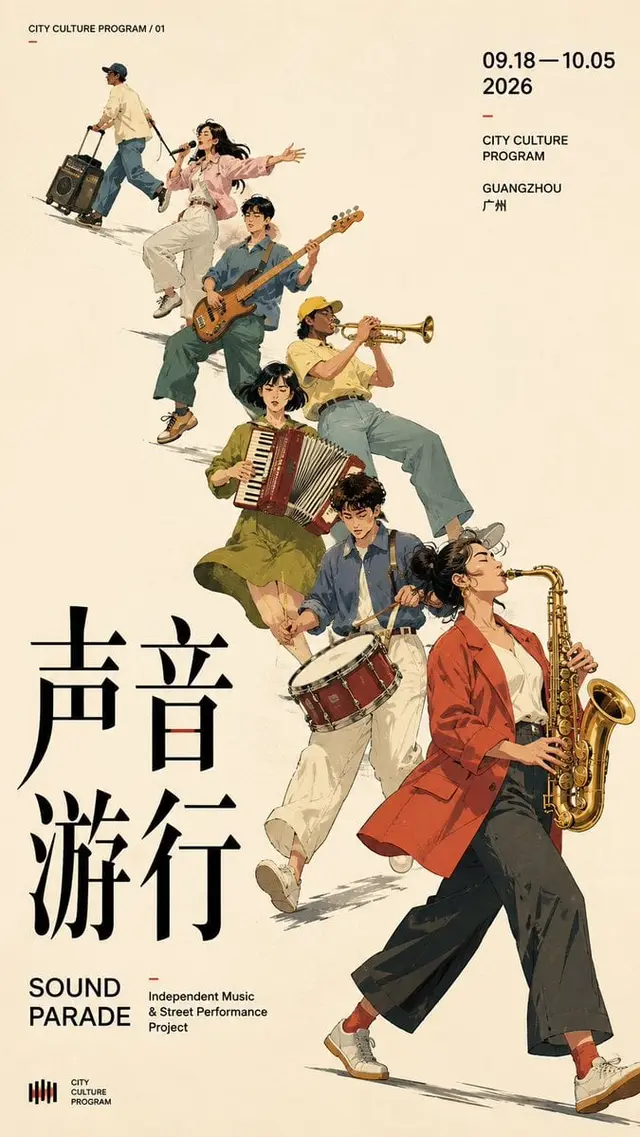
For a group portrait, use character actions, sizes, and arrangements to create a continuous diagonal movement;
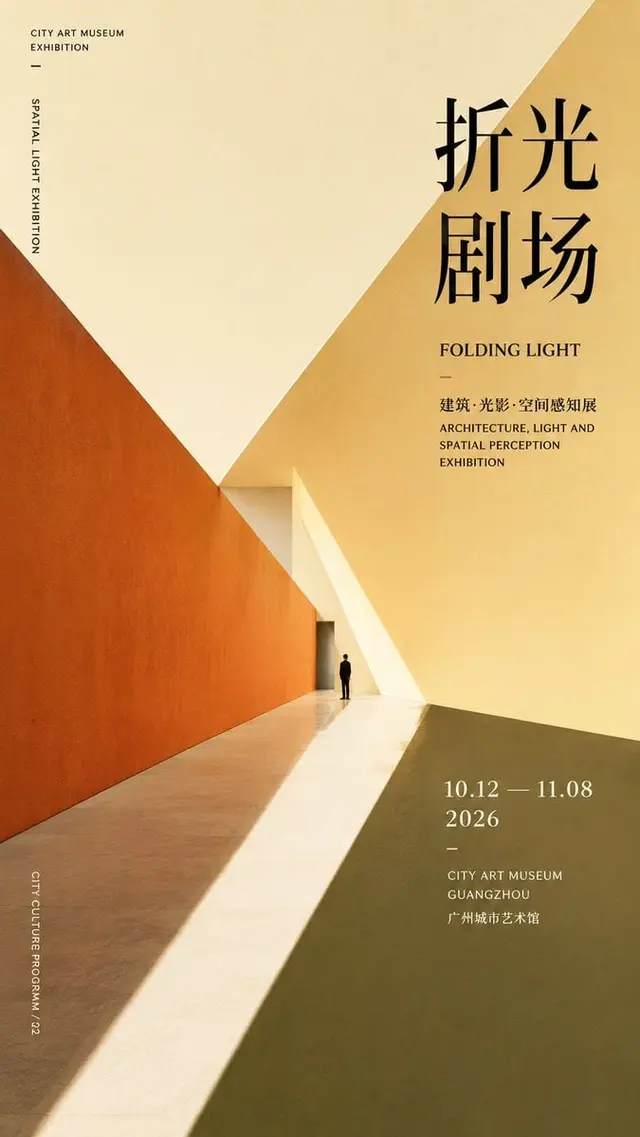
For a spatial type, use architectural sections, perspective, and light and shadow to create a diagonal convergence;
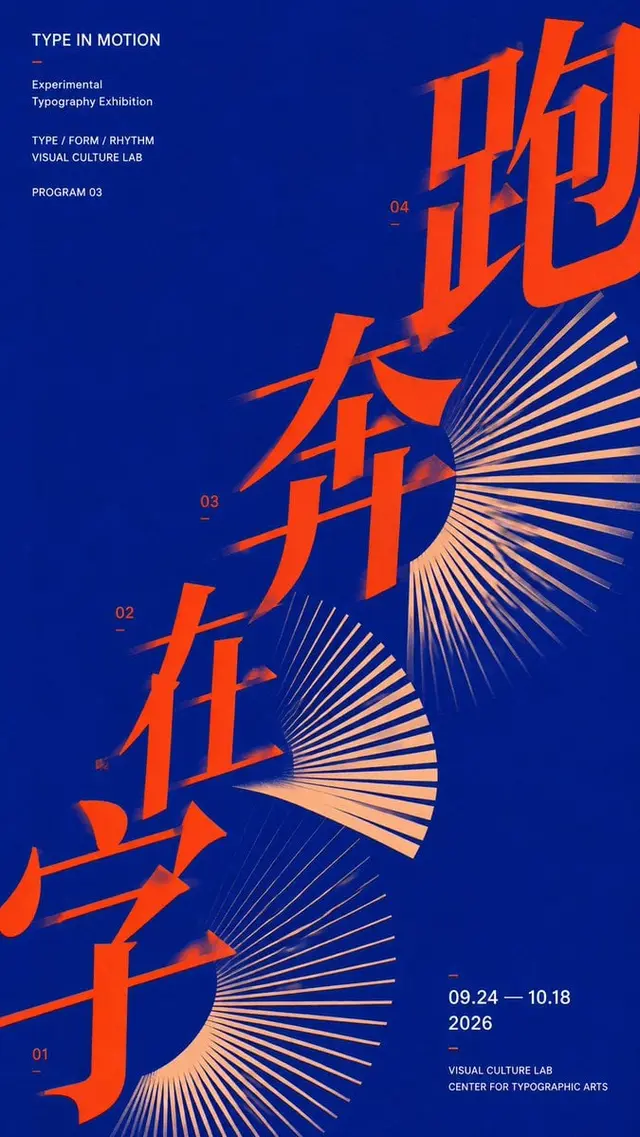
For Typography, use large text advancing, expanding, cutting, and overlapping along the diagonal axis;
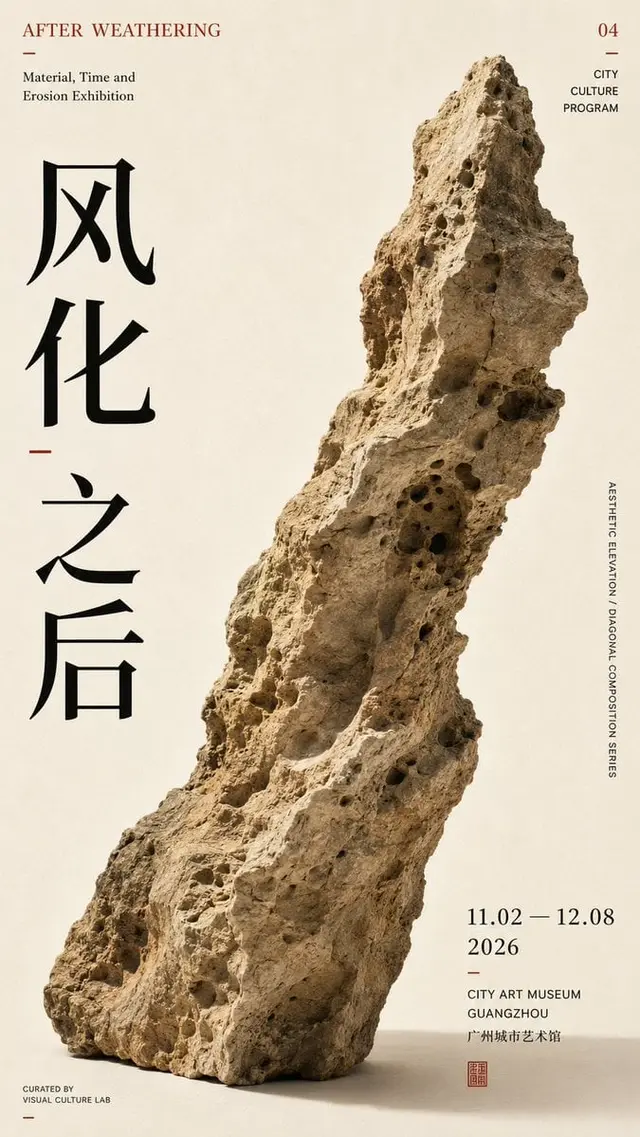
For a single object, use the object's own outline, center of gravity, and tilted posture to naturally form a diagonal posture.

The entire image retains only one main visual direction, with other elements only responsible for following or balancing, without creating new visual competition.

The subject bears the main visual weight, with 25%–40% white space reserved. The Chinese title bears the visual focus, with small English and date information concentrated in 1–2 information areas. Color control is limited to 2–4, enhancing tension through scale, cutting, overlapping, and asymmetric layout.

The focus is not on "drawing a diagonal line," but on allowing the subject, text, and white space to form a diagonal reading path together.

Editorial Graphic Design, mature, restrained, clear, and tense, like a real cultural exhibition poster.
 桃子AI画廊Tao Image Gallery