译文
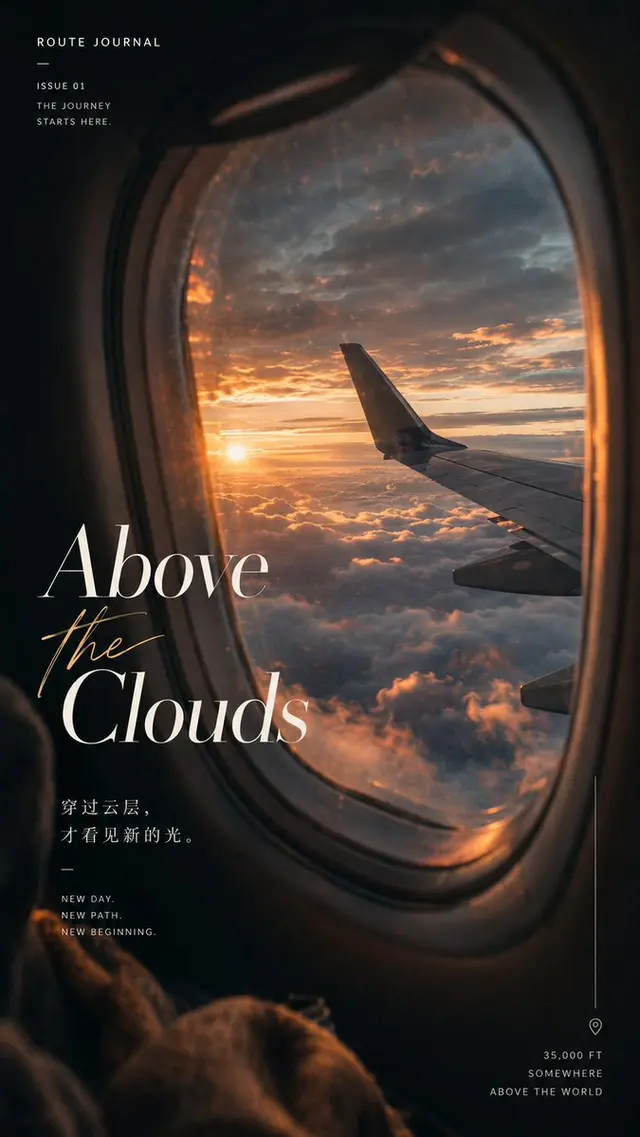
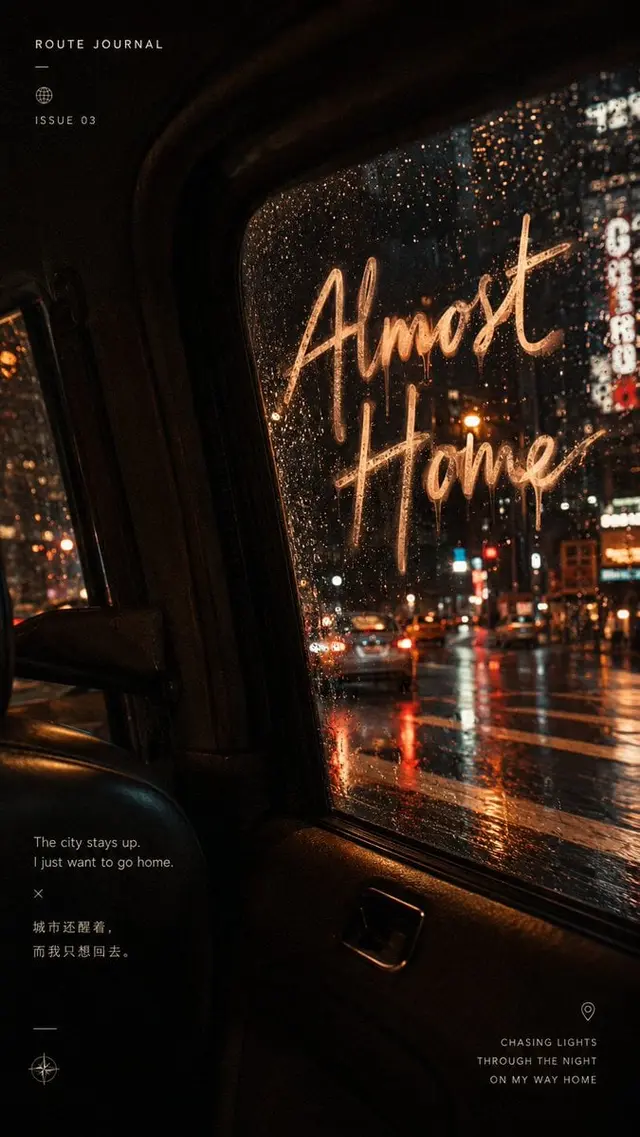
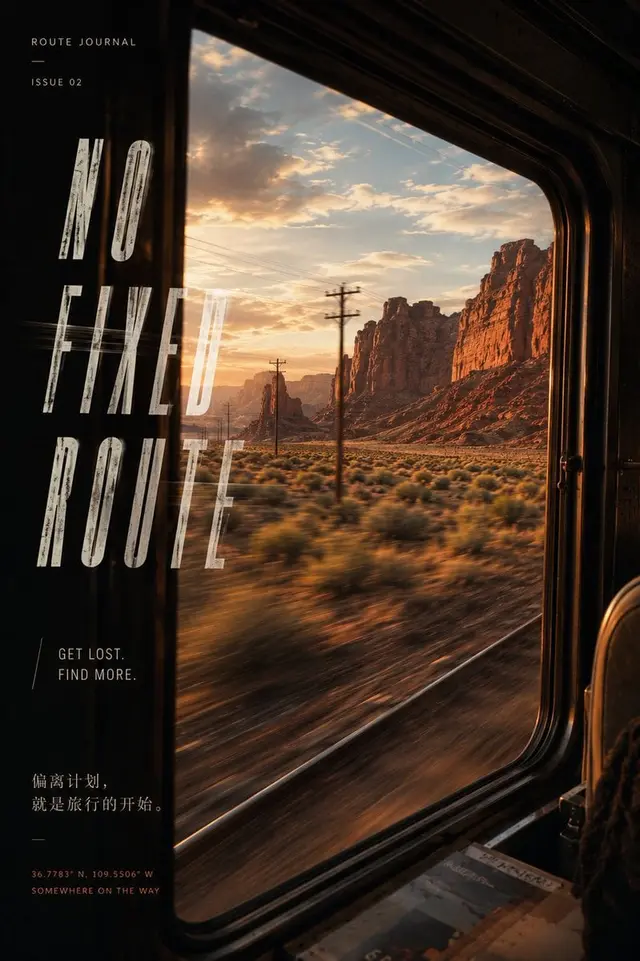
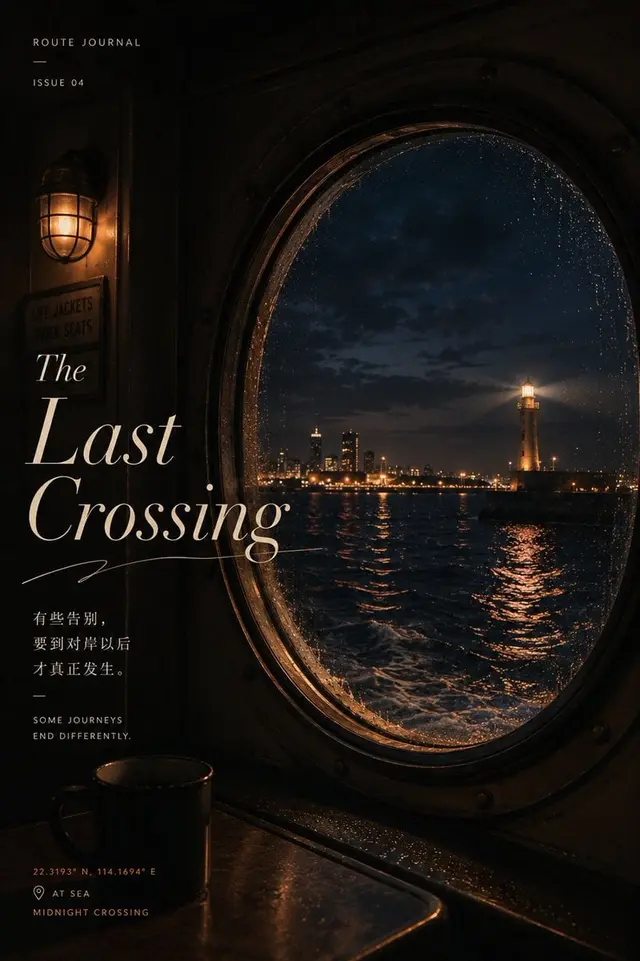
Create a "Journey Window Narrative Poster."

[Replaceable Content]
Transportation: [Transportation]
Scenery Outside: [Scenery Outside]
Theme Emotion: [Theme Emotion]
Main Title: [Main Title]
Supporting Sentence: [Supporting Sentence]
Main Color Scheme: [Main Color Scheme]
Image Aspect Ratio: 9:16

From the perspective of a real passenger, looking diagonally out the window from the side of the seat, the window should not be directly facing the camera nor completely centered. The window frame, seat, armrest, or table corner should naturally enter the frame, creating a realistic spatial obstruction and subjective observation sense.

The interior of the transportation vehicle remains dim, while the scenery outside is bright, forming a clear contrast between the dark inside and the bright outside. The glass has slight reflections, condensation, raindrops, scratches, or reflections of the carriage lights, making the scene look like an accidental moment seen during a journey.

Enhance the sense of movement: Trees, shrubs, utility poles, road signs, lights, or water surfaces near the window have obvious directional dynamic blurring, while distant mountains, cities, clouds, or lighthouses are relatively clear, creating a "close-up with speed, distant view with story" level of depth.

Overall, use cinematic travel photography, vintage magazine editing style, natural film grain, real depth of field, and slight dark corners. The image should have emotion, speed, and a sense of journey, avoiding static landscape photos or neat travel advertisement templates.

Text must become a part of the image:
- Choose high-contrast serif, narrow and long fonts, or hand-written fonts based on the theme
- The main title can partially enter the window frame, shadow, raindrops, or glass reflections
- Allow slight trailing, blurring, reflections, wear, or water surface extension effects on the text
- The text should have a sense of design but remain restrained, without using exaggerated 3D, metal, or showy special effects
- Use simple narrow-body sans-serif fonts for small text
- Retain a few editing elements, such as ROUTE JOURNAL, ISSUE number, coordinates, fine lines, or location tags

The composition of the image does not have to be absolutely symmetrical, allowing for natural tilting, partial cropping, and asymmetrical blank spaces. Realistic photographic texture, advanced, immersive, with cinematic narrative sense, avoiding front-facing windows, complete symmetrical window frames, static landscapes, over-sharpening, over-saturation, templated layout, and text stacking.
 桃子AI画廊Tao Image Gallery